
Formalities first- this is not medical advice. This is a story of what worked for my family.
I originally titled this post, “Finding the Root Cause: How We Healed My Daughter’s Eczema Through Food”. However, that title seemed misleading. Her eczema is under control and managed through hard work and purposeful choices every day. While her skin looks great today, it doesn’t take much for a flareup to occur.
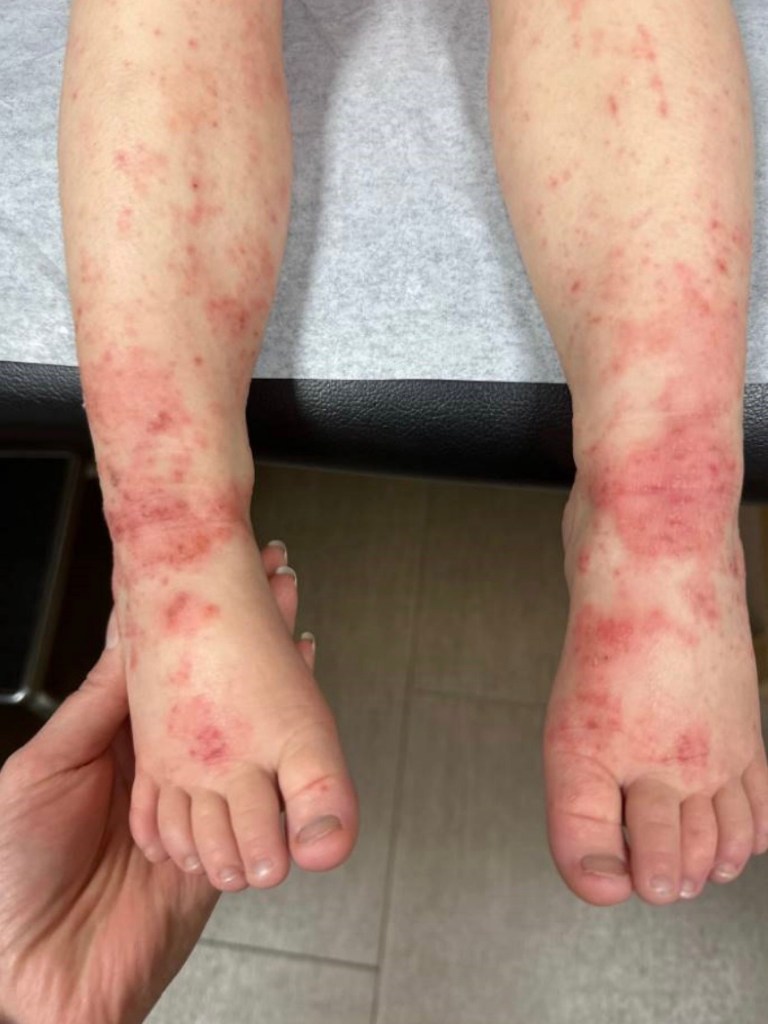
When my second daughter was two, we were in the thick of what felt like an endless eczema battle. Her itchy, red patches covered her whole body and would flare unpredictably, and while creams sometimes helped on the surface, nothing ever truly healed her skin. As a mom, watching her scratch until she cried was heartbreaking. I knew there had to be more to the story than just “treat the symptoms.”
That’s when I decided to take a different approach: instead of only managing the outbreaks, I wanted to dig deeper and uncover the root cause.
The Traditional Path: Doctors, Tests, and Medications
Like most parents, I started by following the medical route. We tried everything the doctors recommended—creams, topical steroids, antihistamines, even started Dupixent (an injectable medication for severe eczema). We also pursued allergy testing, hoping for a clear answer.
But nothing seemed to bring lasting relief. The tests were inconclusive, the steroids only worked temporarily, and the bigger medications felt scary for my now three-year-old. We tried Dupixent for seven months with ZERO improvement. We were so frustrated, and the next recommended medication required routine bloodwork to monitor her kidney function. This was not something I was willing to consider on my toddler.
Let me be clear: I am so grateful for doctors. They are brilliant and compassionate, and they want to help. We ruled out plenty with the help of medical professionals. But what struck me during our visits was how little emphasis there was on the connection between food and eczema. After we ruled out allergies, dietary triggers weren’t really part of the conversation, and I couldn’t shake the feeling that we were missing something important.
Starting the Food Journey
Our family already leaned toward a mostly “crunchy” lifestyle, but convenience often slipped in (hello, busy mom life!). So my first step wasn’t drastic—it was simply looking at what was on our plates. I started reading labels more carefully, swapping out highly processed foods for whole, simple ingredients. And even though daycare provided meals, I sent her with a lunchbox every day and strict instructions that she couldn’t have anything except for what I provided.
I kept a food journal, writing down what my daughter ate and how her skin looked each day. This became the most powerful tool in our journey—it helped me spot patterns I never would have noticed otherwise.
The Elimination Game
We began with gentle eliminations. Artificial dyes were out a long time ago, so next we eliminated dairy and then gluten. Each time, we gave it a few weeks to see if her skin improved. Some foods made a small difference, but nothing was the “aha” we were searching for.
It was frustrating at times. I doubted myself. But every small win—an itch-free night here, a calm patch of skin there—kept me motivated.
Discovering the Trigger: Soy
After months of experimenting and a food sensitivity test, we finally struck gold. When I removed soy, the change was undeniable. Within weeks, her eczema calmed dramatically, and her skin began to heal. She wasn’t scratching through the night anymore, and for the first time in months, she seemed truly comfortable in her own skin.
Soy hides in so many foods—breads, sauces, even “healthy” snacks. It took dedication to learn where it was sneaking in, but once we got the hang of it, meal planning felt manageable.
We also realized that soy is an ingredient in soaps, lotions, shampoo, sunscreen, etc. The list is endless.
Life After Soy
Today, my daughter’s skin is clear, and we manage her eczema naturally through food. This journey taught me that every child is different—what works for one family might not work for another. But for us, identifying and removing soy was the missing puzzle piece.
Most importantly, I learned to trust my mama instincts. When something didn’t feel right, I kept searching until I found answers.

Encouragement for Other Parents
If your little one is struggling with eczema, know that you’re not alone. It can feel overwhelming, but start small:
Keep a food and symptom journal. Try simple swaps one at a time. Be patient—the root cause may take time to uncover. Don’t give up. Healing is possible.
Managing my daughter’s eczema symptoms without medication has been a daily commitment. Our routine includes regular baths to keep her skin hydrated, followed by applying skin balm as often as needed. We’ve found the baby balm from Primally Pure to be especially effective. Over time, we trialed numerous balms, ointments, and lotions—some of which unfortunately made her skin worse. I suspect this was due to soy in the ingredients, which isn’t always clearly listed in topical products. We also switched her bedding and clothing to natural, soft fibers like cotton and bamboo for two reasons: first, I noticed her skin reacted poorly to certain fabrics, and second, these natural fibers felt gentler on her irritated skin. There were times when we had to resort to topical steroids because her eczema flared so severely, but we always used them as a last resort—and that’s okay.
Our story isn’t about a miracle cream or a quick fix—it’s about listening to the body, nourishing from within, and finding what works for your child.
What’s Next in Our Soy-Free Journey
Finding soy as the culprit was only the beginning. The real learning curve came in rebuilding our pantry, navigating restaurants, and teaching our family how to live soy-free without feeling deprived.
In upcoming posts, I’ll share our favorite soy-free swaps and snacks, how we handle eating out without stress, and tips for building a family-friendly soy-free meal plan
If this is a path you’re exploring for your own child, I hope our journey can help light the way.
Here are a few of our go to items. Please remember this is what worked for our situation:
Active skin repair– we used this on any area that was open or cracked. We also use this for cuts and scrapes for all of my kids
Supplements to help aid her immune system
Shampoo: Attitude and babo botanicals are our favorite

 Busy and Barefoot
Leave a comment